Wholistic™, Organic, Gluten-Free, and Dietary Specialty Market
New Orleans’ Culinary Ambassador
Executive Chef Gary Netter, a New Orleans native, is an alumnus of the New Orleans Center for Creative Arts (NOCCA), where he studied classical music. He learned to read music in elementary school and began playing instruments such as the violin, piano, and trumpet. Over the years, he performed alongside Wynton Marsalis and other local musicians.
Although Netter earned a music scholarship to Southern University, his passion for cooking ultimately led him down a different path. His love for the culinary arts was ignited at a young age, as he eagerly awaited the flavorful medleys of his mother Elnora Netter’s homemade dishes. The way she skillfully combined ingredients to create delicious recipes sparked a deep fascination within him, setting the foundation for his culinary journey.
Experience
Chef Gary Netter began his culinary journey at Delgado's Culinary Arts Program, and after Hurricane Katrina, he continued his education at Houston Community College’s (HCC) Culinary Arts Program. He is a proud member of the American Culinary Federation (ACF), where he has had the opportunity to collaborate with renowned international chefs and companies across the United States. With over 20 years of hands-on experience in the food industry, Chef Netter’s culinary career includes the prestigious honor of preparing meals for former U.S. Presidents George H.W. Bush, Bill Clinton, various governors, and, New Orleans Mayors.
Chef Netter’s journey through the industry began humbly as a dishwasher and progressed to executive chef, corporate chef, and ultimately business owner. He has worked in some of the finest establishments, including Commander’s Palace, Palace Café, NOLA, Emeril’s, Muriel’s Jackson Square/Palms Springs, G.W. Finns, Galatoire’s, and Hyde Park Grille, among others. Additionally, Chef Netter has held the role of Area Director for child and sports nutrition in Charter schools and higher education, overseeing Pre-K-12 and beyond.
Throughout his career, he has had the privilege of working alongside culinary legends such as Paul Prudhomme, John Folse, Dickie Brennan, Jamie Shannon, Emeril Lagasse, Charlie Trotter, Leah Chase, Poppy Tucker, and Norman Van Akin. Currently serving as the Culinary Ambassador for the city of New Orleans, Chef Netter collaborates with a range of professionals, including doctors, dietitians, nutritionists, food scientists, and pediatricians. This collaboration deepens his understanding of the importance of mindful eating and its impact on health.
Chef Netter is committed to promoting the idea that food should not only nourish the body but also uplift the spirit and enhance overall well-being. He continues to inspire others to make conscious choices that improve health and vitality.
Mission, Purpose, Commitment.
I, Chef Gary Netter, serve as the Culinary Ambassador for the City of New Orleans with a mission to promote and enhance cultural diversity, equity, inclusion, and health & wellness within the hospitality industry. In this role, I am committed to upholding the highest standards of integrity as a dedicated, results-driven professional.
As the Culinary Ambassador, I will continue my efforts to drive innovation through strategic partnerships and develop deliberate initiatives aimed at increasing workforce diversity in the hospitality sector. I will advocate for mindful eating, sustainability, and the responsible use of resources to combat food waste, food insecurity, and food deserts in underserved communities.
By collaborating with local, national, and international experts, we can address the alarming prevalence of chronic diseases and work to eliminate systemic inequities affecting our communities. Through education, we will highlight the critical connections between the environment, economy, and overall well-being. My goal is to empower and inspire individuals while expanding existing businesses, fostering new opportunities for the disenfranchised, and supporting food manufacturing and culinary education through innovative learning spaces.
Together, we can cultivate a healthier New Orleans—preserving our rich flavors and culture while fostering growth and inclusivity. This partnership with the City of New Orleans is designed to strengthen and unify our culinary and hospitality industries because, in New Orleans, we are a City of Yes!
With Appreciation,
Culinary Proprietor Gary Netter
Culinary Ambassador for the City of New Orleans
Calvin Johnson Food Justice Award
Executive Chef Gary Netter honored with the Calvin Johnson Food Justice Award!
Liberty Kitchen presents Come Grow with Us 2021 gala for its 12 years of impact.
Executive Chef Gary Netter was honored with the prestigious Calvin Johnson Food Award for his outstanding contributions to promoting healthy food access and addressing food insecurity. Through his dedication to creating affordable, nutritious meals and advocating for innovative cooking methods, Chef Gary has made significant strides in ensuring that communities have access to quality food. His efforts in the distribution and preparation of wholesome meals have inspired positive change, highlighting his commitment to improving lives through food.
Chef’s Brigade | Click here
Chef Gary Netter with Superintendent of the New Orleans Police Department (NOPD) Anne Kirkpatrick
Chef Gary Netter with Chef Emeril Lagasse and Chef David Slater
Chef Gary Netter with Current Mayor Helena Moreno
Former Mayor Cantrell announcing Chef Gary Netter as New Orleans Culinary Ambassador
Chef’s Brigade Board Member
Gary Netter, owner of Next To Eat “Wholistic Culinary Market,” is a proud and active board member of Chef's Brigade New Orleans. As New Orleans' Culinary Ambassador, he is dedicated to enhancing the quality of life and health of its residents. coastal restoration
He participated in the initiatives and activities listed below:
Oyster Shell Bagging Event | December 2024 | https://www.chefsbrigade.org/post/oyster-shell-bagging-event
National Oceanic and Atmospheric Administration | November 2023 | https://www.chefsbrigade.org/post/chefs-brigade-goes-to-washington
MEET CHEF GARY NETTER
Chef Gary Netter is a New Orleans native, culinary leader, educator, entrepreneur, and the Culinary Ambassador for the City of New Orleans.
A CULINARY JOURNEY ROOTED IN NEW ORLEANS
For Chef Gary Netter, the journey into food did not begin in a restaurant. It began at home in New Orleans, surrounded by a culture where food, music, family, hospitality, and community are woven into everyday life.
One of his earliest culinary influences was his mother, Elnora Netter. As a young boy, Gary watched and anticipated the flavorful combinations coming from her kitchen. He became fascinated by the way individual ingredients could be brought together to create something memorable. Long before he understood professional cooking techniques, those experiences introduced him to a principle that would remain throughout his career: Ingredients tell a story, and food has the ability to connect people.
But food was not Gary’s first creative discipline. Growing up in New Orleans, music played a major role in shaping his life. He learned to read music in elementary school and developed skills on the violin, piano, and trumpet. That talent eventually led him to the New Orleans Center for Creative Arts — NOCCA — where he studied classical music and developed alongside some of the city’s extraordinary young creative talent. His musical journey also gave him opportunities to perform alongside Wynton Marsalis and other New Orleans musicians.
Gary ultimately received a music scholarship to Southern University, and a future in music was within reach. Yet another calling continued pulling at him.
The same curiosity he had experienced watching his mother cook — the creativity, rhythm, technique, improvisation, and emotion involved in food — began drawing him toward the culinary arts. In time, Chef Gary discovered that music and cooking were not as different as they appeared. Both require discipline. Both require timing. Both require understanding individual components and knowing how to bring them together. And at their best, both have the power to move people.
Chef Gary chose to pursue that growing passion professionally and entered the Culinary Arts Program at Delgado Community College, beginning the formal education that would help transform a love for cooking into a profession.
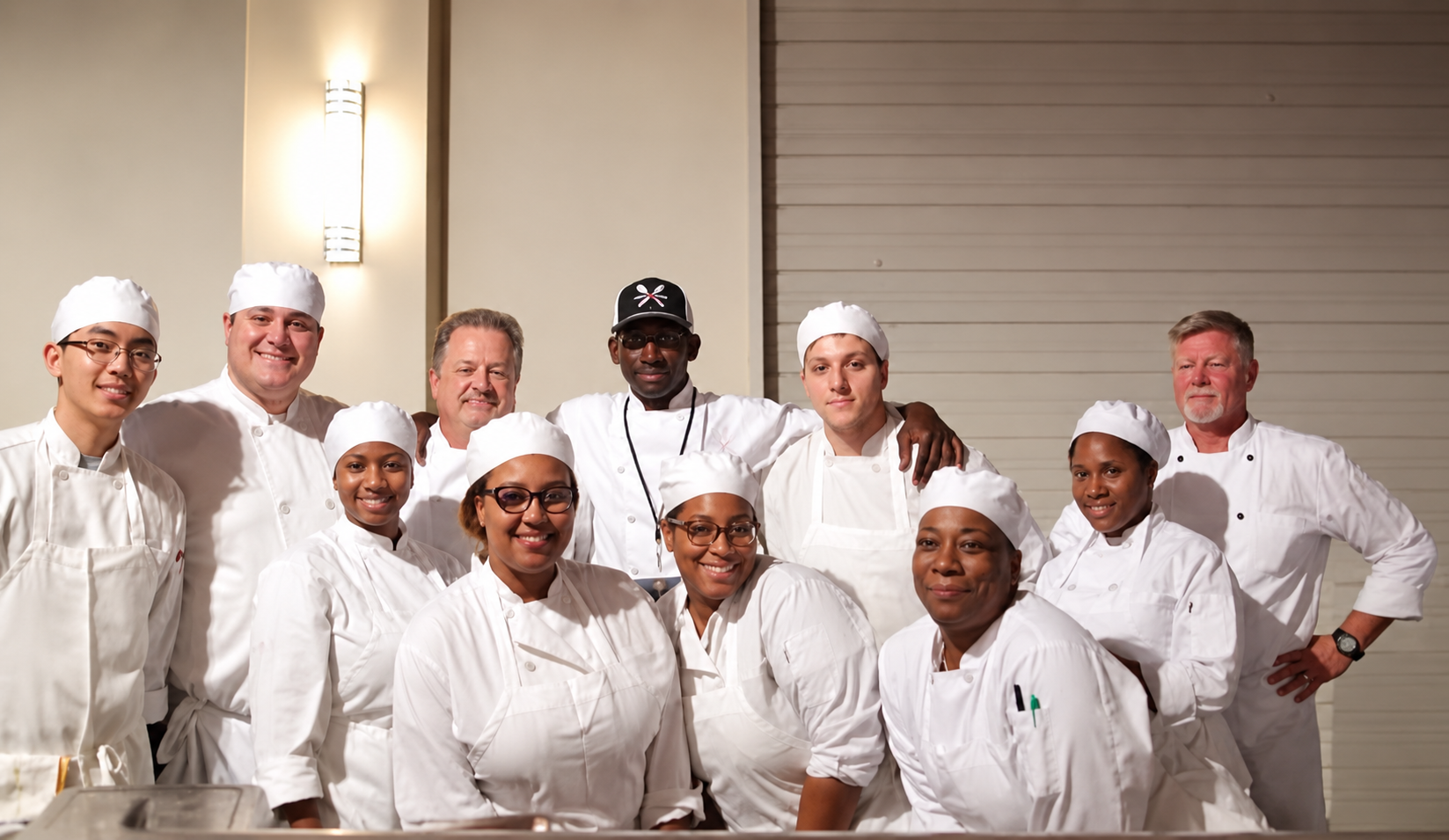
Then Hurricane Katrina changed New Orleans — and changed the lives and plans of countless New Orleanians. Rather than allowing the disruption to end his culinary education, Chef Gary continued his studies through the Houston Community College Culinary Arts Program. That chapter added another defining characteristic to his journey: resilience.
Eventually, Chef Gary returned to the city and culture that helped shape him. New Orleans remained more than his hometown. It became part of his culinary identity.
The city taught him that food could preserve history, express culture, create economic opportunity, bring strangers to the same table, and become a source of pride for an entire community. At the same time, Chef Gary learned that honoring New Orleans cuisine did not mean being limited by tradition. It meant carrying forward its creativity, resourcefulness, hospitality, flavor, resilience, and cultural depth while remaining open to innovation and influences from around the world.
FROM CHEF TO CULINARY ENTREPRENEUR
Chef Gary Netter’s culinary career was built from the ground up. Beginning as a dishwasher, he advanced through the food industry to become an Executive Chef, Corporate Chef, Area Director, culinary leader, entrepreneur, and business owner. His journey has given him an unusually broad perspective on food—not only as fine dining, but as hospitality, nutrition, education, healthcare, community service, and business.
Chef Gary developed his culinary foundation in some of New Orleans’ most respected and nationally recognized restaurants, including Commander’s Palace, Palace Café, NOLA, Emeril’s, Muriel’s Jackson Square, GW Fins, Galatoire’s, Hyde Park Grille, and other distinguished establishments. Working in kitchens known for demanding standards of quality and hospitality helped shape his discipline, attention to detail, leadership, creativity, and respect for the craft.
Throughout his career, Chef Gary also had opportunities to work alongside and learn from some of the culinary industry’s most influential chefs and food personalities, including Paul Prudhomme, John Folse, Dickie Brennan, Jamie Shannon, Emeril Lagasse, Charlie Trotter, Leah Chase, Poppy Tooker, and Norman Van Aken. His professional experience also includes the distinguished honor of preparing meals for former U.S. Presidents George H.W. Bush and Bill Clinton, as well as governors and New Orleans mayors.
But Chef Gary’s experience extends far beyond restaurant kitchens. His career expanded into child nutrition, sports nutrition, institutional food service, healthcare, and education, including leadership responsibilities serving Pre-K through 12th-grade students, charter schools, higher education, children’s hospital environments, adult hospital environments, and other populations with specialized nutritional needs.
As an Area Director, he gained firsthand experience managing food and nutrition programs where safety, consistency, nutrition, dietary requirements, large-scale operations, accountability, and flavor were all essential.
That range of experience changed the way Chef Gary viewed the role of a chef. He saw food at nearly every stage of life—from feeding young children and students, to serving patients and adults with specific health needs, to creating memorable dining experiences in some of the country’s most respected restaurants. It reinforced his belief that food carries a responsibility far greater than simply satisfying hunger.
Those experiences eventually became part of the foundation for Next To Eat. Chef Gary brought together the standards of fine dining, the discipline of institutional food service, the importance of nutrition and healthcare, the power of education, and his entrepreneurial vision to begin building something broader than a traditional restaurant.
Today, that journey continues through a growing vision centered on WHOListic food and wellness, culinary medicine, education, workforce development, entrepreneurship, product innovation, community health, and creating better access to purposeful food.
From the dish room to some of America’s most respected kitchens, from schools to healthcare environments, and from serving presidents to serving communities, each experience has helped shape the chef, leader, educator, and entrepreneur Chef Gary Netter is today.
THE WHOListic APPROACH
For Chef Gary Netter, food has never been only about what is placed on the plate.
It is about the whole experience—the ingredients, the preparation, the culture behind the dish, the nutritional value, the way the food makes a person feel, and the impact that food can have on families and communities.
That thinking is at the heart of Chef Gary’s WHOListic approach.
WHOListic means looking beyond a single meal and considering the whole person, the whole ingredient, the whole lifestyle, and the whole community. It recognizes that food can be enjoyable and comforting while also being intentional, educational, nourishing, and supportive of better health.
Chef Gary believes people should not have to choose between flavor and wellness.
His philosophy challenges the idea that healthier food has to be bland, restrictive, unfamiliar, or disconnected from culture. Instead, he brings the standards of professional cooking together with real ingredients, bold flavor, culinary creativity, and greater awareness of how everyday food choices can affect the body over time.
The WHOListic approach starts with the ingredients themselves.
Chef Gary places strong emphasis on understanding what is in the food, where it comes from, how it is prepared, and why it is being used. That means looking more closely at refined sugars, artificial flavors, preservatives, highly processed ingredients, excessive sodium, unnecessary additives, and other elements that can easily become part of the modern diet without the consumer fully understanding them.
But the goal is not simply to remove ingredients.
The goal is to replace them with something better—real foods, herbs, spices, fruits, vegetables, whole grains, quality proteins, plant-forward ingredients, and culinary techniques that build flavor naturally while supporting a more intentional way of eating.
This is where Chef Gary’s background in professional kitchens becomes especially important.
WHOListic cooking is not about abandoning culinary standards. It is about using those standards differently.
The same discipline used to build layers of flavor in a fine-dining kitchen can be used to create a meal that is health-forward. The same creativity used to develop a restaurant dish can be applied to food designed for children, families, patients, workplaces, churches, or communities. The same attention to ingredients, technique, presentation, and consistency can help create food that is both memorable and purposeful.
Chef Gary also believes that education must be part of the meal.
When people understand why an ingredient is being used, what role it can play in the body, how to prepare it, and how to incorporate it into everyday life, food becomes more than something they consume.
It becomes knowledge they can carry with them.
That belief is one reason Chef Gary’s work increasingly connects food with culinary medicine, nutrition education, disease-prevention awareness, food safety, workforce development, entrepreneurship, and community wellness.
For Chef Gary, the kitchen can become a place where people learn how to take greater control of what they eat without losing the culture, flavor, joy, and human connection that make food meaningful.
The WHOListic philosophy also recognizes that wellness does not begin and end with an individual.
Food affects households. It affects schools. It affects workplaces. It affects healthcare systems. It affects neighborhoods. And it affects the economic opportunities available to the people who grow, prepare, manufacture, distribute, and sell it.
That is why Chef Gary sees WHOListic food as part of a much larger ecosystem.
It is a way to connect culinary excellence, health, education, culture, entrepreneurship, workforce development, product innovation, and community impact under one vision.
The ultimate goal is not perfection, restriction, or telling people what they cannot eat.
It is about giving people better choices, better information, and better tools—and proving that food designed with greater intention can still be delicious, culturally relevant, exciting, and worthy of the same culinary standards expected from a great restaurant.
For Chef Gary Netter, WHOListic is not simply a label placed on a menu or product.
It is a way of thinking about the future of food.
A future where ingredients tell the story, flavor earns people’s attention, education gives them understanding, and food becomes part of the solution.
CULINARY MEDICINE, EDUCATION & COMMUNITY
Chef Gary Netter’s work has evolved beyond preparing food for people.
Today, a major part of his mission is helping people better understand what they are eating, why it matters, and how food can become a practical tool for improving everyday life.
That mission sits at the intersection of culinary medicine, education, and community impact.
For Chef Gary, culinary medicine begins with a simple but powerful idea: people should be able to understand how the foods and ingredients they use every day can support the body, influence long-term wellness, and become part of a healthier lifestyle.
It is not about turning the kitchen into a doctor’s office.
It is about using the kitchen as a place where people can learn how to make more informed choices.
Chef Gary’s approach brings together professional culinary technique, ingredient knowledge, health-forward preparation, cultural awareness, food safety, and practical nutrition education. The goal is to help people see food differently—not simply as something to consume, but as something they can understand, prepare intentionally, and use more effectively in their own lives.
That philosophy has been shaped by the full range of Chef Gary’s career.
His experience serving children in Pre-K through 12th grade, working within school and educational food-service environments, supporting children’s hospital and adult hospital settings, leading large-scale food operations, and working with individuals who may have specific dietary or nutritional needs gave him firsthand exposure to how dramatically food requirements can change from one population to another.
Those experiences reinforced an important lesson:
There is no single way of eating that serves every person, every family, or every community.
Children have different needs than adults. Patients may require different considerations than restaurant guests. Athletes, seniors, individuals managing chronic conditions, growing families, and people simply trying to make better choices may all need different kinds of support.
That understanding helped shape Chef Gary’s broader vision for culinary medicine—one that is practical, inclusive, educational, and built around real-life situations.
EDUCATION BEYOND THE RECIPE
Chef Gary believes that teaching someone how to prepare a dish is only the beginning.
True culinary education should also help people understand ingredients, preparation methods, food safety, nutrition, portioning, cross-contamination, purchasing, storage, budgeting, and how to make informed decisions when they are not standing beside a chef.
That is especially important for young people.
Through Next To Eat, Chef Gary has continued developing culinary education and workforce-development concepts designed to expose young adults to more than cooking skills alone. Participants can begin learning how the food industry actually works—from production and sanitation to customer service, entrepreneurship, product development, business operations, and the responsibilities that come with serving the public.
The goal is not simply to create more cooks.
It is to help develop future chefs, food entrepreneurs, culinary professionals, business owners, innovators, and community leaders.
Chef Gary sees the food industry as one of the most powerful entry points into economic opportunity because it allows people to turn creativity and skill into careers, businesses, products, and services.
But opportunity becomes more sustainable when it is supported by education.
That is why Next To Eat’s broader vision includes creating environments where emerging food entrepreneurs can learn, experiment, produce, and grow while gaining exposure to the systems and standards required to operate professionally.
FOOD AS A COMMUNITY RESOURCE
Chef Gary’s work is also rooted in the belief that better food education should not be limited to people who can afford private chefs, expensive wellness programs, or premium health services.
It belongs in schools, churches, workplaces, healthcare settings, community organizations, kitchens, neighborhoods, and homes.
Communities facing diet-related health challenges often do not need another lecture telling them what they are doing wrong.
They need practical tools.
They need food that tastes good.
They need education that makes sense.
They need culturally relevant options.
They need access.
And they need people who understand that lasting change must respect the realities of everyday life.
That is the role Chef Gary believes culinary professionals can help fill.
Through health-forward meal concepts, cooking education, WHOListic food programs, culinary medicine initiatives, youth development, workforce training, church wellness concepts, community partnerships, media education, and future innovation-center programming, Chef Gary is working to connect food with solutions that people can actually use.
His vision is especially focused on helping communities better understand how everyday food choices can relate to areas such as heart health, blood sugar management, inflammation, gut health, weight management, immune support, energy, and overall wellness—while continuing to emphasize that education and responsible professional guidance matter when food is being discussed in connection with health.
BUILDING CAPACITY, NOT DEPENDENCE
One of Chef Gary’s most important principles is that meaningful community work should leave people with something they can continue using after the program ends.
A cooking demonstration can inspire someone for a day.
Education can influence what they do for years.
That is why Chef Gary wants people to leave his programs with greater confidence—not only knowing what was prepared in front of them, but understanding how and why it was prepared and how they can apply those lessons themselves.
The same philosophy applies to entrepreneurs.
Rather than simply giving someone space to prepare food, Chef Gary’s vision is to help create an environment where emerging businesses can strengthen their knowledge of food safety, production, operations, product development, customer service, branding, and the realities of running a sustainable food business.
This approach transforms a kitchen from a place of production into a place of education, workforce development, entrepreneurship, innovation, and economic opportunity.
THE KITCHEN AS A CLASSROOM
After a career that has taken Chef Gary through restaurants, schools, healthcare, institutional food service, leadership, entrepreneurship, and community programming, he sees the kitchen differently than he did when his journey began.
It is still a place where great food should be created.
But it can also be a classroom.
A wellness laboratory.
A training center.
A business incubator.
A place where young people discover careers.
A place where entrepreneurs begin building companies.
A place where families learn new ways to approach food.
And a place where communities can begin changing their relationship with what they eat.
For Chef Gary Netter, culinary medicine, education, and community are not separate ideas.
They are connected parts of one mission:
Use the power of food to educate people, create opportunity, support healthier communities, and help build a better future—one ingredient, one meal, one person, and one community at a time.
CULINARY AMBASSADOR FOR THE CITY OF NEW ORLEANS
For Chef Gary Netter, serving as Culinary Ambassador for the City of New Orleans is both an honor and a responsibility.
New Orleans is one of the world’s most recognized food cities—a place where cuisine carries history, culture, identity, hospitality, resilience, and generations of tradition. Representing that legacy means more than promoting great dishes. It means helping tell the story of a city whose food has influenced the way people around the world understand flavor, celebration, and community.
Chef Gary approaches that role with deep pride because New Orleans is not simply where his career began.
It is the city that shaped him.
It is where he learned that food could bring families together, where music and creativity became part of his identity, where professional kitchens taught him discipline and excellence, and where community taught him the importance of using talent in service to others.
As Culinary Ambassador, Chef Gary believes his responsibility is to honor what New Orleans has given the world while helping the city participate in conversations about where food is going next.
That means celebrating the traditions that made New Orleans cuisine internationally respected, while also encouraging innovation around wellness, culinary medicine, nutrition education, food entrepreneurship, workforce development, sustainability, product development, and the future of the food industry.
Chef Gary does not see tradition and innovation as opposites.
He believes the strongest culinary cultures are able to protect their history while continuing to evolve.
New Orleans itself is proof of that.
Its cuisine was built through the blending of cultures, techniques, ingredients, migration, adaptation, and creativity. For generations, New Orleans cooks have taken what was available, transformed it through skill and imagination, and created food that became part of the city’s identity.
Chef Gary believes that same creative spirit can help guide New Orleans into the next era of food.
An era where the city remains known for unforgettable flavor and hospitality, while also becoming increasingly recognized for culinary education, health-forward innovation, food entrepreneurship, workforce development, and new approaches to community wellness.
REPRESENTING NEW ORLEANS BEYOND THE PLATE
Chef Gary’s vision for culinary ambassadorship extends beyond restaurants and traditional food events.
He sees opportunities to represent New Orleans in schools, churches, hospitals, workplaces, culinary institutions, community organizations, media, tourism, product development, national partnerships, and international conversations about food and culture.
Every one of those environments offers a different way to tell the New Orleans story.
In a school, that story may become education.
In a hospital or wellness setting, it may become culinary medicine.
In a business incubator, it may become entrepreneurship.
On television, it may become storytelling.
At a community event, it may become connection.
And in another city or country, it may become an introduction to the culture, creativity, and hospitality that make New Orleans unlike anywhere else in the world.
Chef Gary believes a true culinary ambassador should not simply represent a city’s past.
A culinary ambassador should also help create opportunities for its future.
OPENING DOORS FOR THE NEXT GENERATION
One of the most important parts of Chef Gary’s vision is ensuring that the recognition associated with New Orleans cuisine creates opportunities for more people from New Orleans.
That includes young people considering culinary careers, aspiring chefs, emerging food entrepreneurs, small businesses, product developers, hospitality professionals, and individuals who may never have realized how many career paths exist throughout the food industry.
Chef Gary understands that many young people first encounter the culinary profession through the visible role of “chef.”
But behind every plate is an entire industry.
Food production.
Nutrition.
Research and development.
Manufacturing.
Distribution.
Hospitality management.
Food safety.
Marketing.
Media.
Agriculture.
Catering.
Institutional food service.
Product innovation.
Entrepreneurship.
And countless other opportunities.
As Culinary Ambassador, Chef Gary wants to help broaden the way the next generation sees the food industry—and help connect New Orleans talent to those opportunities.
For him, representing the city means making sure its culinary legacy does not simply produce admiration.
It should also produce education, careers, businesses, ownership, and economic opportunity.
CONNECTING NEW ORLEANS TO THE WORLD
Chef Gary’s culinary perspective is proudly rooted in New Orleans, but it is not limited by geography.
He believes one of the greatest ways to honor New Orleans is to place its culinary creativity in conversation with the rest of the world.
Every culture has ingredients, traditions, techniques, and food stories worth understanding.
Through travel, media, educational programming, culinary partnerships, and What’s Next To Eat?, Chef Gary sees opportunities to explore international cuisines while showing how food connects people across cultures.
The goal is not to make every cuisine taste like New Orleans.
It is to approach other culinary traditions with the same curiosity and respect that New Orleans culture deserves.
That exchange creates opportunities for learning in both directions.
New Orleans can share its extraordinary culinary identity with the world, while also learning from global approaches to ingredients, wellness, sustainability, preservation, community food systems, and culinary tradition.
Chef Gary sees that exchange as part of the future of the city’s culinary leadership.
PROTECTING THE LEGACY WHILE BUILDING THE FUTURE
Chef Gary Netter’s role as Culinary Ambassador is ultimately about stewardship.
Stewardship of a culinary legacy that existed long before him.
Responsibility to the community that helped shape him.
And a commitment to ensuring that future generations inherit both the traditions and the opportunities needed to move New Orleans forward.
He wants the world to continue recognizing New Orleans for its gumbo, seafood, Creole and Cajun traditions, neighborhood restaurants, legendary chefs, music, hospitality, and celebrations.
But he also wants people to look at New Orleans and see something else:
A city capable of helping lead the future of food.
A city where culinary heritage and health innovation can coexist.
Where celebrated chefs and emerging entrepreneurs can both find opportunity.
Where food can create tourism and economic development while also becoming a tool for education and community wellness.
Where young people can inherit more than recipes—they can inherit pathways to careers, businesses, and leadership.
For Chef Gary, that is what it means to represent New Orleans.
Honor the culture. Tell the story. Create opportunity. Serve the community. And help carry one of the world’s great food cities confidently into what comes next.CULINARY AMBASSADOR FOR THE CITY OF NEW ORLEANS
For Chef Gary Netter, serving as Culinary Ambassador for the City of New Orleans is both an honor and a responsibility.
New Orleans is one of the world’s most recognized food cities—a place where cuisine carries history, culture, identity, hospitality, resilience, and generations of tradition. Representing that legacy means more than promoting great dishes. It means helping tell the story of a city whose food has influenced the way people around the world understand flavor, celebration, and community.
Chef Gary approaches that role with deep pride because New Orleans is not simply where his career began.
It is the city that shaped him.
It is where he learned that food could bring families together, where music and creativity became part of his identity, where professional kitchens taught him discipline and excellence, and where community taught him the importance of using talent in service to others.
As Culinary Ambassador, Chef Gary believes his responsibility is to honor what New Orleans has given the world while helping the city participate in conversations about where food is going next.
That means celebrating the traditions that made New Orleans cuisine internationally respected, while also encouraging innovation around wellness, culinary medicine, nutrition education, food entrepreneurship, workforce development, sustainability, product development, and the future of the food industry.
Chef Gary does not see tradition and innovation as opposites.
He believes the strongest culinary cultures are able to protect their history while continuing to evolve.
New Orleans itself is proof of that.
Its cuisine was built through the blending of cultures, techniques, ingredients, migration, adaptation, and creativity. For generations, New Orleans cooks have taken what was available, transformed it through skill and imagination, and created food that became part of the city’s identity.
Chef Gary believes that same creative spirit can help guide New Orleans into the next era of food.
An era where the city remains known for unforgettable flavor and hospitality, while also becoming increasingly recognized for culinary education, health-forward innovation, food entrepreneurship, workforce development, and new approaches to community wellness.
REPRESENTING NEW ORLEANS BEYOND THE PLATE
Chef Gary’s vision for culinary ambassadorship extends beyond restaurants and traditional food events.
He sees opportunities to represent New Orleans in schools, churches, hospitals, workplaces, culinary institutions, community organizations, media, tourism, product development, national partnerships, and international conversations about food and culture.
Every one of those environments offers a different way to tell the New Orleans story.
In a school, that story may become education.
In a hospital or wellness setting, it may become culinary medicine.
In a business incubator, it may become entrepreneurship.
On television, it may become storytelling.
At a community event, it may become connection.
And in another city or country, it may become an introduction to the culture, creativity, and hospitality that make New Orleans unlike anywhere else in the world.
Chef Gary believes a true culinary ambassador should not simply represent a city’s past.
A culinary ambassador should also help create opportunities for its future.
OPENING DOORS FOR THE NEXT GENERATION
One of the most important parts of Chef Gary’s vision is ensuring that the recognition associated with New Orleans cuisine creates opportunities for more people from New Orleans.
That includes young people considering culinary careers, aspiring chefs, emerging food entrepreneurs, small businesses, product developers, hospitality professionals, and individuals who may never have realized how many career paths exist throughout the food industry.
Chef Gary understands that many young people first encounter the culinary profession through the visible role of “chef.”
But behind every plate is an entire industry.
Food production.
Nutrition.
Research and development.
Manufacturing.
Distribution.
Hospitality management.
Food safety.
Marketing.
Media.
Agriculture.
Catering.
Institutional food service.
Product innovation.
Entrepreneurship.
And countless other opportunities.
As Culinary Ambassador, Chef Gary wants to help broaden the way the next generation sees the food industry—and help connect New Orleans talent to those opportunities.
For him, representing the city means making sure its culinary legacy does not simply produce admiration.
It should also produce education, careers, businesses, ownership, and economic opportunity.
CONNECTING NEW ORLEANS TO THE WORLD
Chef Gary’s culinary perspective is proudly rooted in New Orleans, but it is not limited by geography.
He believes one of the greatest ways to honor New Orleans is to place its culinary creativity in conversation with the rest of the world.
Every culture has ingredients, traditions, techniques, and food stories worth understanding.
Through travel, media, educational programming, culinary partnerships, and What’s Next To Eat?, Chef Gary sees opportunities to explore international cuisines while showing how food connects people across cultures.
The goal is not to make every cuisine taste like New Orleans.
It is to approach other culinary traditions with the same curiosity and respect that New Orleans culture deserves.
That exchange creates opportunities for learning in both directions.
New Orleans can share its extraordinary culinary identity with the world, while also learning from global approaches to ingredients, wellness, sustainability, preservation, community food systems, and culinary tradition.
Chef Gary sees that exchange as part of the future of the city’s culinary leadership.
PROTECTING THE LEGACY WHILE BUILDING THE FUTURE
Chef Gary Netter’s role as Culinary Ambassador is ultimately about stewardship.
Stewardship of a culinary legacy that existed long before him.
Responsibility to the community that helped shape him.
And a commitment to ensuring that future generations inherit both the traditions and the opportunities needed to move New Orleans forward.
He wants the world to continue recognizing New Orleans for its gumbo, seafood, Creole and Cajun traditions, neighborhood restaurants, legendary chefs, music, hospitality, and celebrations.
But he also wants people to look at New Orleans and see something else:
A city capable of helping lead the future of food.
A city where culinary heritage and health innovation can coexist.
Where celebrated chefs and emerging entrepreneurs can both find opportunity.
Where food can create tourism and economic development while also becoming a tool for education and community wellness.
Where young people can inherit more than recipes—they can inherit pathways to careers, businesses, and leadership.
For Chef Gary, that is what it means to represent New Orleans.
Honor the culture. Tell the story. Create opportunity. Serve the community. And help carry one of the world’s great food cities confidently into what comes next.
WHAT’S NEXT TO EAT?
For Chef Gary Netter, What’s Next To Eat? is more than the name of a cooking show.
It is a question that represents the future of food.
What are we eating?
Why are we eating it?
Where did the ingredients come from?
How does culture influence what is on the plate?
How can food support better health?
What should the next generation know about cooking, nutrition, food safety, entrepreneurship, and the food industry?
And most importantly:
What comes next?
That question became the foundation for What’s Next To Eat?, Chef Gary’s educational food and wellness media platform designed to move beyond the traditional cooking-show format.
The vision is not simply to place a chef behind a counter, prepare a recipe, and send the audience away with instructions.
Chef Gary wants viewers to understand the story behind the food.
INGREDIENTS TELL THE STORY
At the heart of What’s Next To Eat? is a belief that has followed Chef Gary throughout his culinary journey:
Ingredients tell the story.
Every ingredient carries information.
It may tell the story of a country or culture.
It may reveal how generations of people learned to preserve, season, cook, and share food.
It may explain why a particular dish tastes the way it does.
And it may help people better understand how the foods they choose can fit into a more intentional approach to wellness.
That is why What’s Next To Eat? is designed to go deeper than the recipe.
A segment may begin with a familiar ingredient, but the conversation can expand into culture, culinary technique, nutrition, food safety, history, wellness, agriculture, entrepreneurship, or product innovation.
The food becomes the starting point for education.
BREAKING AWAY FROM THE TRADITIONAL COOKING SHOW
Chef Gary’s vision for What’s Next To Eat? intentionally breaks away from the traditional cooking television format.
The goal is not simply to show people how to cook.
It is to help people understand food.
That means viewers may see an ingredient explored before it ever reaches the pan.
They may learn why one preparation technique is used instead of another.
They may discover how a traditional dish can be approached differently without disrespecting its culture.
They may learn about cross-contamination, sanitation, proper food handling, ingredient labels, or the hidden elements that often go unnoticed when people make everyday food decisions.
They may also see how professional culinary techniques can be used to make health-forward food just as flavorful, exciting, and visually appealing as anything served in a great restaurant.
The show is designed to make education part of the entertainment—not something separate from it.
A GLOBAL TABLE
Although Chef Gary’s culinary identity is deeply rooted in New Orleans, What’s Next To Eat? is not limited to New Orleans cuisine.
Food is one of the most powerful ways people experience the world.
Every country and culture has something to teach through its ingredients, cooking methods, traditions, and relationship with food.
Chef Gary wants the show to explore cuisines from around the world with curiosity and respect—highlighting not only how dishes are prepared, but why they matter to the people and cultures that created them.
One episode may explore New Orleans.
Another may take inspiration from the Mediterranean.
Another could examine West African ingredients, Caribbean traditions, Latin American cooking, Asian culinary techniques, Indigenous foods, or contemporary approaches to plant-forward cuisine.
The purpose is not to erase the identity of those cuisines or force them into one style.
It is to learn from them.
Chef Gary believes that when people understand the story behind another culture’s food, they often gain a greater understanding of the people behind it.
In that way, the table becomes a place of connection.
FOOD, WELLNESS & THE REAL WORLD
What’s Next To Eat? also creates a platform for conversations about the relationship between food and wellness.
Rather than promising miracle foods or presenting nutrition as a collection of trends, Chef Gary’s approach is grounded in education, practical cooking, ingredient awareness, and responsible conversations about health.
The show can explore topics such as heart health, blood sugar awareness, inflammation, gut health, energy, plant-forward eating, protein, portioning, and other areas of wellness while demonstrating how those conversations translate into real meals people can actually prepare and enjoy.
Chef Gary believes wellness information becomes much more useful when people can see it happening in a kitchen.
It is one thing to tell someone to eat differently.
It is another to show them how to do it, why it matters, what it should taste like, and how it can fit into everyday life.
THE NEXT GENERATION OF FOOD
The question “What’s Next To Eat?” also reaches beyond nutrition.
Chef Gary sees tremendous changes happening throughout the food industry.
New products.
New technologies.
New entrepreneurs.
New approaches to sustainability.
New ways of producing and delivering food.
Changing consumer expectations.
Growing interest in ingredient transparency.
And a generation that increasingly wants to know not only what is in its food, but who made it, how it was made, and what it represents.
The platform gives Chef Gary an opportunity to introduce viewers to the people helping shape that future.
That could include chefs, farmers, doctors and healthcare professionals, dietitians, food scientists, entrepreneurs, educators, students, community leaders, manufacturers, innovators, cultural historians, and families with food traditions worth preserving.
What’s Next To Eat? becomes a place where those voices can meet.
EDUCATION THAT CAN TRAVEL
One of the greatest opportunities Chef Gary sees in media is its ability to carry education far beyond the walls of a kitchen.
A cooking class may reach a room of people.
A television program, digital series, classroom video, social-media segment, or educational resource can potentially reach families and communities far beyond that room.
That reach matters.
Chef Gary wants What’s Next To Eat? to become a platform that can support schools, families, churches, workplaces, healthcare organizations, community programs, culinary students, aspiring entrepreneurs, and anyone interested in making more informed decisions about food.
The goal is to create content people can enjoy—but also information they can use.
MORE THAN A SHOW
Ultimately, What’s Next To Eat? represents something much larger than television.
It is part of Chef Gary Netter’s broader vision for connecting food, culture, wellness, education, entrepreneurship, media, innovation, and community impact.
The show gives those ideas a voice.
It allows Chef Gary to take lessons learned from decades in professional kitchens, schools, hospitals, institutional food service, entrepreneurship, and community work and bring them directly to the public.
It also creates a bridge between the extraordinary culinary traditions that shaped him and the questions that will shape the food industry for generations to come.
For Chef Gary, the answer to “What’s Next To Eat?” will never be just one dish.
It is an ongoing conversation about what we eat, what we know, what we teach, what we create, and what kind of food future we want to build together.
And every conversation begins the same way:
What’s Next To Eat?
LET’S BUILD WHAT COMES NEXT TOGETHER
The future of food will not be shaped by one chef, one company, one institution, or one community working alone.
It will be shaped by people and organizations willing to collaborate, innovate, educate, invest, and create solutions together.
Chef Gary Netter and Next To Eat are building toward a future where food can do more—where culinary excellence can support wellness, where education can create opportunity, where young people can discover careers, where entrepreneurs can build businesses, where communities can gain practical tools for healthier living, and where media can help make important food knowledge more accessible.
Now the invitation is open to others who share that vision.
We welcome conversations with healthcare organizations, schools and universities, churches, foundations, corporations, financial institutions, government and civic leaders, food manufacturers, culinary professionals, community organizations, media partners, sponsors, investors, and innovators interested in helping create meaningful and measurable impact through food.
There are many ways to build together.
A healthcare organization may help develop a culinary medicine initiative.
A school or university may create new pathways for culinary education and workforce development.
A church may become a hub for community wellness.
A corporation or foundation may help expand access to programs in underserved communities.
A manufacturer may collaborate on the next generation of WHOListic food products.
A media partner may help bring What’s Next To Eat? to a larger audience.
An investor or strategic partner may help strengthen the infrastructure needed to take a proven idea to a much larger scale.
And a community leader may help identify the people and neighborhoods where these solutions can matter most.
The goal is not partnership for the sake of partnership.
It is to bring together the right people, resources, expertise, and opportunities to create something that produces lasting value.
Next To Eat is interested in relationships where everyone can bring something meaningful to the table—and where the work that happens around that table can reach far beyond it.
THE NEXT CONVERSATION COULD START WITH YOU
If your organization believes in the power of food, wellness, education, entrepreneurship, workforce development, innovation, media, and community impact, Chef Gary would welcome the opportunity to explore what we may be able to build together.
Because the most important question is no longer simply:
What’s Next To Eat?
The question is:
What can we create next—and who will we create it with?
CONNECT WITH CHEF GARY & NEXT TO EAT
Partnerships • Sponsorships • Community Programs • Culinary Medicine • Education • Media • Product Innovation • Speaking • Investment & Strategic Collaboration
Next To Eat
WHOListic Food. Education. Innovation. Community.
Let’s build what comes next.
LET’S BUILD WHAT COMES NEXT TOGETHER
The future of food will not be shaped by one chef, one company, one institution, or one community working alone.
It will be shaped by people and organizations willing to collaborate, innovate, educate, invest, and create solutions together.
Chef Gary Netter and Next To Eat are building toward a future where food can do more—where culinary excellence can support wellness, where education can create opportunity, where young people can discover careers, where entrepreneurs can build businesses, where communities can gain practical tools for healthier living, and where media can help make important food knowledge more accessible.
Now the invitation is open to others who share that vision.
We welcome conversations with healthcare organizations, schools and universities, churches, foundations, corporations, financial institutions, government and civic leaders, food manufacturers, culinary professionals, community organizations, media partners, sponsors, investors, and innovators interested in helping create meaningful and measurable impact through food.
There are many ways to build together.
A healthcare organization may help develop a culinary medicine initiative.
A school or university may create new pathways for culinary education and workforce development.
A church may become a hub for community wellness.
A corporation or foundation may help expand access to programs in underserved communities.
A manufacturer may collaborate on the next generation of WHOListic food products.
A media partner may help bring What’s Next To Eat? to a larger audience.
An investor or strategic partner may help strengthen the infrastructure needed to take a proven idea to a much larger scale.
And a community leader may help identify the people and neighborhoods where these solutions can matter most.
The goal is not partnership for the sake of partnership.
It is to bring together the right people, resources, expertise, and opportunities to create something that produces lasting value.
Next To Eat is interested in relationships where everyone can bring something meaningful to the table—and where the work that happens around that table can reach far beyond it.
THE NEXT CONVERSATION COULD START WITH YOU
If your organization believes in the power of food, wellness, education, entrepreneurship, workforce development, innovation, media, and community impact, Chef Gary would welcome the opportunity to explore what we may be able to build together.
Because the most important question is no longer simply:
What’s Next To Eat?
The question is:
What can we create next—and who will we create it with?
CONNECT WITH CHEF GARY & NEXT TO EAT
Partnerships • Sponsorships • Community Programs • Culinary Medicine • Education • Media • Product Innovation • Speaking • Investment & Strategic Collaboration
Next To Eat
WHOListic Food. Education. Innovation. Community.
Let’s build what comes next.